The role of transitions in learning
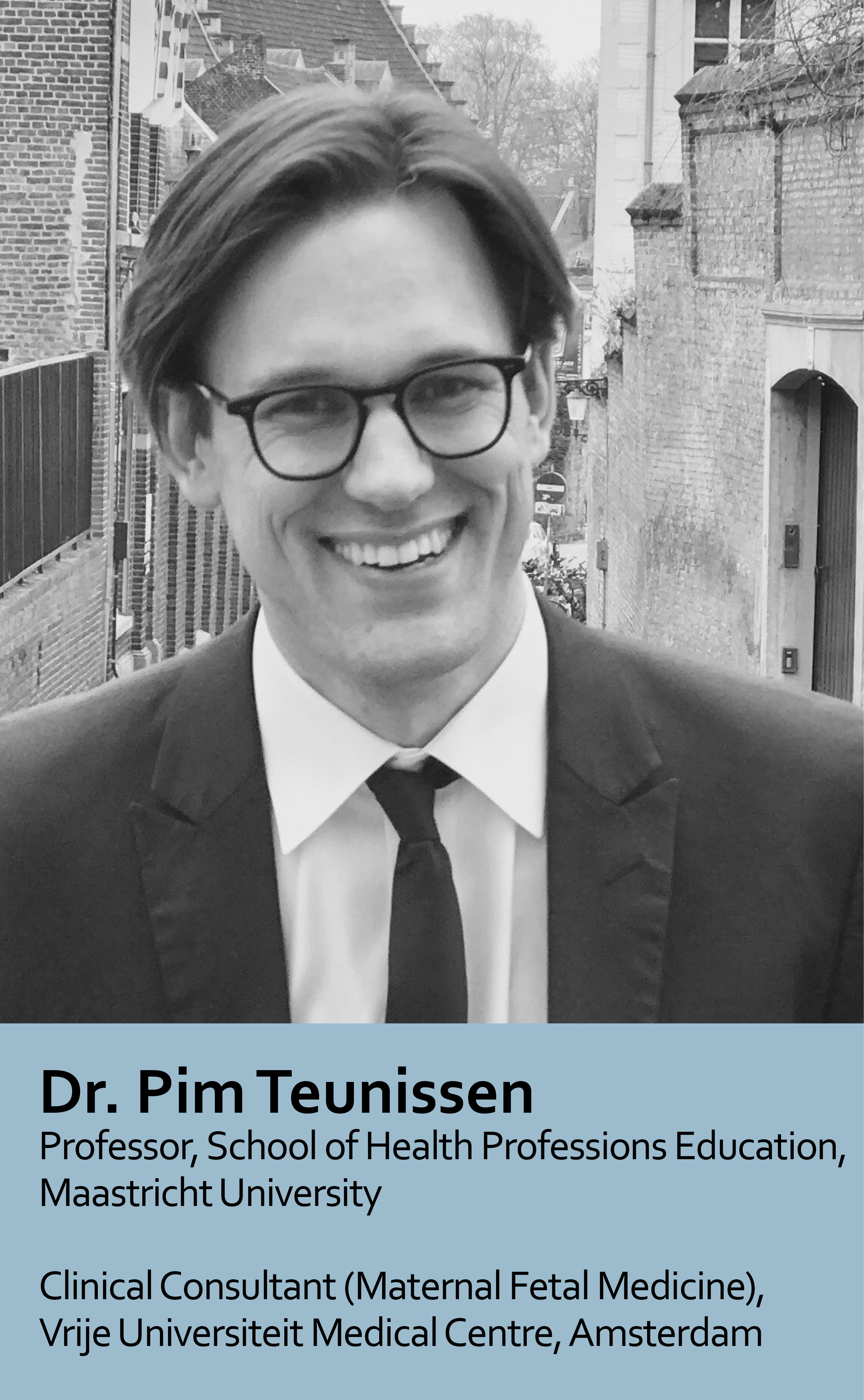
Dr. Pim Teunissen
Date: Wednesday, October 18, 2017
Time: 12:00pm to 1:30pm (feel free to bring a bagged lunch)
Locations:
- DHCC 2267 (host venue)
- IRC 305
- RJH CA 120
- NHSC 9-374
Remote:
- Movi E, ID 30336
- Additional locations and video conference options are available. Please email ches.secretary@ubc.ca to process the request.
Abstract
Transitions are common in the medical education continuum. They range from small ones, such as a medical student moving from one rotation to the next, to larger ones, such as a senior resident finishing training and starting a first position as a junior consultant. Next to residents transitioning to consultant, there are two other major transitions in medical training. The first is students going from non-clinical to clinical training and the second is that of graduated students becoming residents. We tend to treat these three major transitions as problems. They can lead to personal turmoil, can increase the risk of burnout, are accompanied by a drop of competence and may even lead to unacceptable risk for patients. There is, however, another side to transitions. They are examples of change that is part and parcel of our working lives and healthcare in general. How healthcare professionals deal with change, small and large, is key to how well they function, adapt and cope with challenges. When we see change in the working life of healthcare professionals as normal and even desirable, a new set of questions need to be answered. How do medical students and doctors deal with change, how does medical education prepare them for change and how can workplaces capitalize on change as a learning opportunity? From this perspective, I will highlight the challenges and opportunity transitions offer in the context of workplace learning.
Biography
Dr. Pim Teunissen, MD, PhD, combines a career as a clinician with research in medical education. He is a maternal-fetal-medicine specialist at the Department of Obstetrics and Gynecology at the VU University Medical Center in Amsterdam. He combines this with a position as professor of workplace learning in healthcare at the School of Health Professions Education (SHE) at Maastricht University. Dr. Teunissen uses his clinical experience to inform his research and vice versa. In his research he focuses on connecting concepts and methodologies from different scientific disciplines to pertinent issues within healthcare education. His research activities span the continuum from medical students to new consultants in a variety of specialties and he has published more than 75 scientific articles and book chapters related to workplace learning in healthcare. In 2013/2014 he spent 7 months as a visiting scholar at CHES and looks forward to coming back for CHES Rounds.
Accreditation:
The University of British Columbia Division of Continuing Professional Development (UBC CPD) is fully accredited by the Committee on Accreditation of Continuing Medical Education (CACME) to provide study credits for continuing medical education for physicians. This course has been reviewed and approved by the UBC Division of Continuing Professional Development. This Group Learning course meets the certification criteria of the College of Family Physicians of Canada and has been certified by UBC CPD for up to 1.5 Mainpro+ credits. This course is an Accredited Group Learning Activity eligible for up to 1.5 MOC Section 1 credits as defined by the Maintenance of Certification program of the Royal College of Physicians and Surgeons of Canada. Each physician should claim only those credits he/she actually spent in the activity.